Healthcare Doesn’t Have a Staffing Problem. It Has a Capacity Problem.
By Amol Nirgudkar, Co-Founder & CEO of Patient Prism
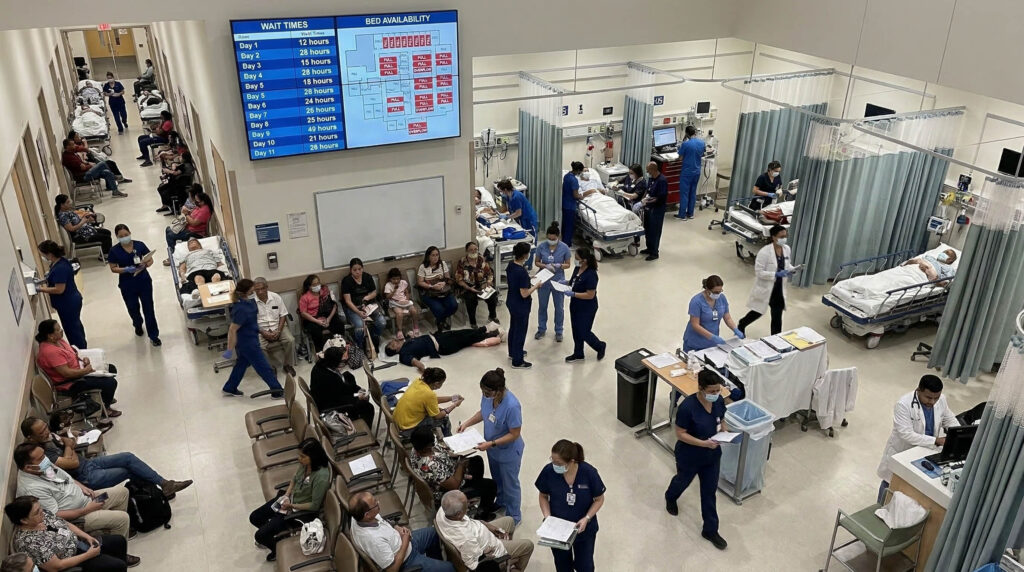
The healthcare staffing crisis has dominated industry headlines for years. Every conference keynote, every board meeting, every trade publication leads with the same refrain: we can’t find enough people. And while the labor shortage is real, it has become a convenient excuse for a much deeper operational failure. One that no amount of hiring will fix.
After a decade of building AI solutions for healthcare organizations, I’ve come to a counterintuitive conclusion: most practices don’t need more staff. They need to unlock the capacity they already have.
The Real Math Behind the Shortage
Here’s what the staffing narrative misses. Whether it’s a single dental practice or a multi-site health system, revenue growth and overhead growth are converging. Organizations are growing revenue in the low single digits while labor costs, supplies, equipment, and facilities eat up nearly all of that gain. The margin left over, if any, is razor-thin.
The instinctive response is to hire more providers, more front-office staff, more support personnel. But even when organizations can find and afford talent, the underlying problem remains: operational leakage is silently undermining care delivery at every stage of the patient journey.
Consider what happens with a typical batch of inbound patient inquiries at a healthcare practice. For every hundred people who reach out, the vast majority never get booked. Some are lost to missed or mishandled phone calls. Others fall through because the organization can’t accommodate their schedule, doesn’t verify their insurance in time, or simply fails to follow up. The patients who do get an appointment often cancel or no-show. By the time you trace the journey from first contact to care delivered, the leakage is staggering.
This isn’t a hiring problem. It’s a systems problem.
From “Hire More” to “Optimize Smarter”
The shift I’m advocating for is deceptively simple: before adding headcount, figure out whether your existing team is operating at true capacity. Not just “busy,” but genuinely serving the patients who need you most.
There’s an important distinction here. Many healthcare organizations fill their schedules to the brim and still underserve their patients. The issue is that the patients who need the most urgent or complex care are often the ones waiting the longest. Someone calling with a dental emergency or needing implant surgery shouldn’t be told “we can see you in three weeks.” But that’s exactly what happens when schedules are packed with lower-acuity visits that could have been flexibly accommodated later.
Think of a provider’s daily schedule as a jar. If you fill it first with routine visits, there’s no room left when a patient calls who genuinely needs you today. But if you build the schedule intentionally, reserving capacity for patients with the highest clinical need, you end up serving your community better. The fact that higher-acuity care also tends to generate more revenue per visit is a byproduct of doing right by patients, not the goal itself.
This isn’t about turning anyone away. It’s about making sure the people who need care the most aren’t the ones who wait the longest.
Why AI Alone Isn’t the Answer
Here’s where my decade in healthcare AI taught me the hardest lesson. For years, my team and I focused on building the best algorithms, the best call analytics, the best predictive models. And for years, adoption stalled. The technology worked. The people didn’t change.
The revelation, and I don’t use that word lightly, was that technology doesn’t drive growth. Behavior does. You can deploy the most sophisticated AI platform in the world, but if front-office staff don’t change how they handle calls, if providers don’t open their schedules to match demand, if operations leaders don’t act on the insights, nothing moves.
This aligns with what broader research is finding across industries. Studies suggest that the vast majority of enterprise AI initiatives fail to deliver ROI. Not because the models are bad, but because organizations can’t bridge the gap between insight and action. The tools don’t adapt. The workflows are brittle. And employees revert to familiar patterns.
The organizations succeeding with AI in healthcare aren’t the ones with the fanciest technology. They’re the ones using AI as a behavior-change engine, surfacing specific, prescriptive actions that tell each team member exactly what to do next.
What Prescriptive Capacity Management Looks Like
In practice, AI-driven capacity management works across three interconnected domains: marketing, patient engagement, and operations.
On the marketing side, it means understanding not just how many inquiries are coming in, but what types. Are you reaching the patients who actually need your services? If your providers are trained for complex procedures but your marketing is generating mostly routine appointment requests, you have a mismatch. And no amount of additional spending will fix it.
On the patient engagement side, it means looking closely at how front-office teams handle inbound conversations. Which team members are doing a great job connecting patients with the care they need? Which ones need coaching? Where are conversations breaking down? AI can listen to these interactions and provide real-time coaching guidance, turning average performers into strong ones without hiring a single additional person.
On the operations side, it means rethinking scheduling templates entirely. Are you reserving enough capacity for patients with urgent or complex needs? What’s your protocol when a cancellation opens up an appointment window? Are you releasing unused provider time back into the available pool quickly enough? One pattern I see repeatedly is organizations booking complex-care patients weeks out, only to watch them never show up. Meanwhile, a same-week appointment would have connected that patient with the care they needed.
When all three domains are aligned, the right patients being reached, the right conversations happening to get them scheduled, and the right operational infrastructure ready to serve them, the same team delivers better care to more people. No new hires required.
The Capacity Mindset for 2026
Healthcare is entering a period where execution matters more than expansion. The organizations that thrive won’t be the ones that outspend on recruiting. They’ll be the ones that eliminate waste, improve every patient interaction, and treat their team’s time as the precious resource it is.
This requires a fundamental mindset shift. Stop asking “how do we hire more?” and start asking “are we ready for the patients who need us right now?” In my experience, the answer is almost always no. And that gap represents both a missed opportunity to serve your community and a significant amount of revenue left on the table.
The staffing crisis is real. But for most healthcare organizations, the bigger crisis is hiding in plain sight: a capacity problem masquerading as a people problem. Fix the capacity, and you might find you had enough people all along.
About the Author
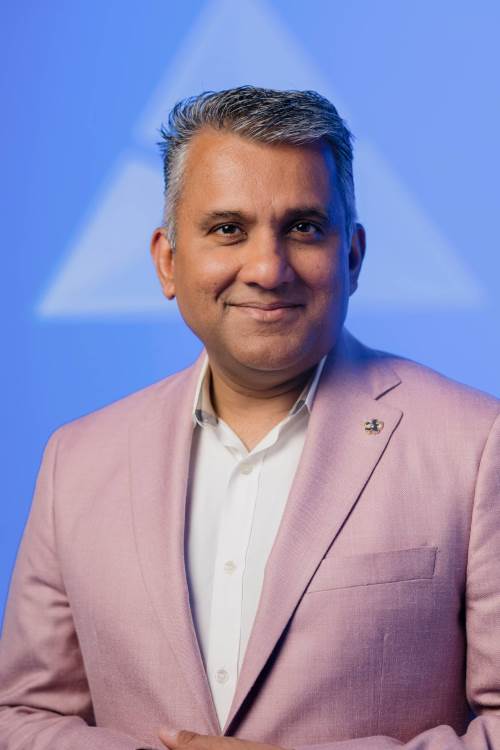
Amol Nirgudkar is a seasoned leader dedicated to accelerating growth and profitability for healthcare organizations. With over two decades of experience as a certified public accountant, business consultant, author, and inventor, Amol has a proven track record of transforming healthcare practices and groups into thriving enterprises.
He is the co-founder and CEO of Patient Prism, the leading AI-powered growth platform trusted by over 10,000 healthcare clinics across the United States. Patient Prism specializes in AI-enabled patient acquisition and capacity optimization, intelligently matching patient demand with organizational capacity to ensure schedules are filled with the right patients. Its capabilities include AI-powered call tracking, conversational analytics, real-time performance insights, and actionable intelligence to improve marketing effectiveness, sales efficiency, and operational excellence.
An inventor holding five patents, Amol is recognized as a thought leader in healthcare AI and frequently shares his expertise through industry events and media. Beyond Patient Prism, he has launched ventures in finance, real estate, and AI consultancy.